.jpg)
Blog
Thinking
A small footprint on your big day
by
Jessie Millner
January 28, 2026
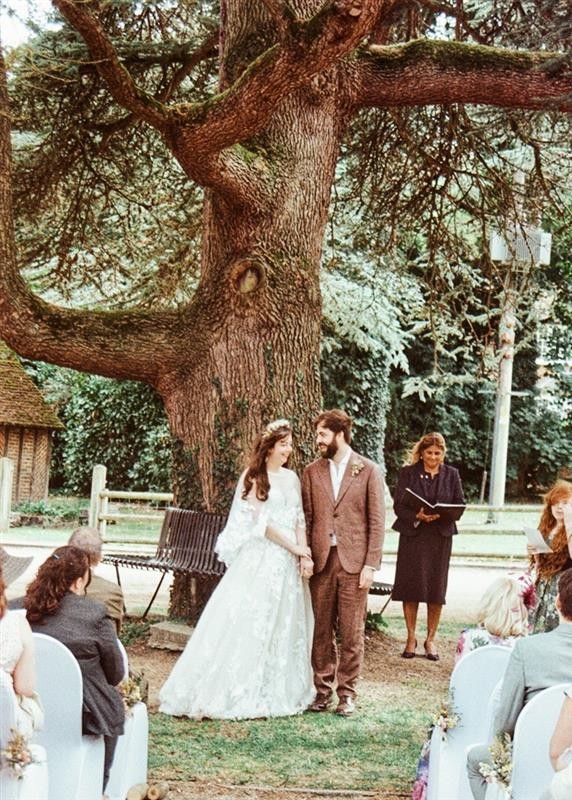
2025 was a busy year for me ( Jessie Millner ) professionally and personally. I ended up project spending most of my time on project planning because while I was taking on some really interesting new work projects, I was also planning a wedding! Working at Salt I’d been thinking a lot about how to produce sustainably and so when it came to planning this my wedding for our large group of friends and family, I was thinking a lot about cost and consumption and how to make an impact efficiently and sustainably.
If you’re anything like me, you start wedding planning with wholesome intentions and a spreadsheet. Then, three tabs in, you’ve done in-depth research for every “wedding chair sashes” supplier in Kent, and all of a sudden you’re sure that this plastic mass produced “cards and gifts” sign is integral to the success of your wedding day.
The pressure is understandable. Although you start out wanting to keep things romantic and simple, it quickly becomes clear that many of your friends and family will judge your taste and character based on this day for years to come. You start waking up in a hot sweat from a nightmare about your cousins whispering ‘No table runners?’ to each other beneath a hand-sewn, but now fraying ribbon garland.
And once you see that total cost rising, you may find yourself downloading Temu, just out of curiosity. You’re sick of driving after work to pick up second-hand napkin ring holders, when you could buy them new on Temu for cheaper! Everyone else is doing it. You don’t do it often. What’s the harm?
But the harm can be real.
Ultra-cheap marketplaces and fast-fashion giants have been repeatedly linked (by journalists and watchdogs) to serious supply chain concerns: huge carbon footprints, poor working conditions, and allegations around forced and child labour in parts of the global garment supply chain. Even when you’re not buying clothes, you’re often buying items made with the same race-to-the-bottom logic.
What I have found through resisting the temptation is that it is completely possible to make your wedding less expensive, lighter on the planet, and honestly more personal without turning it into a joyless eco-lecture. A sustainable wedding isn’t about perfection. It’s about choosing what matters, skipping what doesn’t, and being just a tiny bit stubborn when the wedding TikToks try to convince you that you need 100 satin bows.
These small touches everyone feels they need to include are rarely what people remember. Your guests want to eat well, have a drink, laugh with their friends, and celebrate with you.
Tips and challenges
Something old: Buying second-hand
It seems like the obvious choice because you’d imagine people will want to give a second life to their wedding items, but unfortunately, we found a lot of people choose to buy really cheaply and treat items as disposable, and when they don’t, they are often hiring all of their décor.
It can be really challenging to find something that’s right for the vibe you want to create, within driving distance from you, and with the right quantity. We found it was really important to be flexible with style and ended up with quite an eclectic, mismatched look for the event, which in the end we loved!
Hiring: not always economical
If you choose to use a hire company for décor you are going to have an easier time, but it might cost quite a lot more. Of course, you need to hire your catering items if your venue isn’t providing, because where are you getting a coffee urn?
But there are often some really big markups on décor. We got very lucky and very creative here and sourced all of the crockery from second-hand shops, so each of our guests had a unique vintage plate. We crafted fabric garlands from off-cut material, and made place-name holders from old tree branches donated by our friend who works in a local forest. This was a lot harder to source than we originally set out and took us almost a year to collect. But it made for a really impactful and personal décor which meant we didn’t need to worry about centrepieces and party favours as the effort was obvious.
Flowers: dried over plastic
Artificial flowers seem sustainable because in theory they could be reused, and you hear a lot of people talking about the energy used to grow fresh flowers. But looking through the second-hand resale pages, you notice that there isn’t really a lot of appetite for buying other people’s artificial flowers.
Often people want to keep many of their bouquets for sentimental reasons so you can’t really buy a job-lot. People have very individual taste when it comes to flowers so you may struggle to find something to suit your style and dress colours, and you often need to spend quite a lot to achieve a bouquet which looks convincing.
My suggestion is to consider dried flowers. Dried flowers can be grown in season, meaning they don’t need high energy consumption greenhouses to grow. They don’t wilt so can make pretty home decorations and keepsakes after your wedding. But bonus: We found they were quite a bit less expensive because the florist can work with a more relaxed timeline to produce them.
Food: (sort of) self-catering
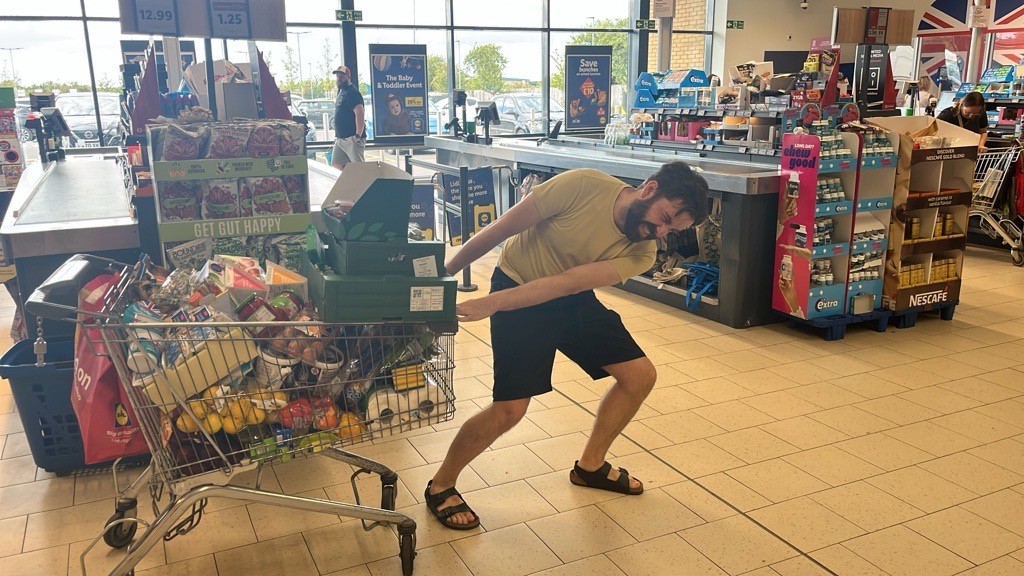
We were really surprised just how expensive catering can be! We are personally meat eaters but we try to be conscious about the farming standards of our food so that we can be as sustainable in our lives as we can. We didn’t feel comfortable paying for 100 people’s meals with food which we weren’t clear on the source of.
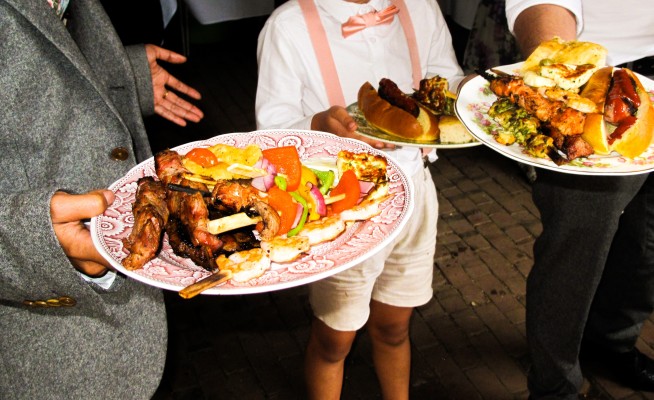
So instead of going to a direct caterer, we hired an events staffing crew and threw a BBQ. All of the meat and produce was sourced from a farm which was within five miles of the venue, and our bridal and groom’s party spent 6 hours the day before the wedding in several kitchens around Kent skewering and marinating and chopping to produce a BBQ buffet which we were really proud of.
It was hard work but it was such a fun and special day with our friends. One of the most exciting moments was smelling the BBQs being lit after the ceremony, and all of our friends proudly pointing out the dishes they prepared as they were laid out.
And we spent half as much on food as we would have if we paid per person for a set meal. The best part? Everyone went home with not just a slice of cake (made by my lovely mother in law) but also leftover BBQ, which I imagine they scoffed back in their hotel room after booging late into the night.
It sounds impossible for a big guest list, but it wasn’t, and it made our wedding feel so personal!
Afterwards: what happens to it all?
My biggest takeaway from trawling through second-hand pages and advice forums is that everyone is buying from Temu because the hassle of buying second hand is too much for a lot of people and the convenience and price is too tempting.
So really the only way you’ll have much hope of your wedding purchases having a second life is to give them away. It’s all well and good me sitting on my high horse telling people off for buying unsustainably, when I have the time to DIY things and a budget to find other options, but many people on back-to-back night shifts aren’t going to want to source sustainable fabric and sit at a sewing machine making bunting.
Of course I have my keep sakes but I have tried to give away as much of what I made or purchased as I can for free, so that someone else can have a really special day too.
If you’re planning something big and want it to feel thoughtful without costing the earth (literally), I hope this gave you a few ideas. I’d do it the same way again in a heartbeat.